ABOUT US
The London Centre for the Study of Contemporary Antisemitism (LCSCA), Gratz College in Philadelphia, and the Comper Center at Haifa University have joined forces to shape the emerging field of Contemporary Antisemitism Studies across Europe,
North America and the Middle East. LCSCA has focused on scholarly community and infrastructure; Gratz is responding to current challenges with great nimbleness, building its creative and energetic postgraduate programme on antisemitism; and the Comper Center brings together research fellows and is expanding postgraduate teaching in Israel on antisemitism.
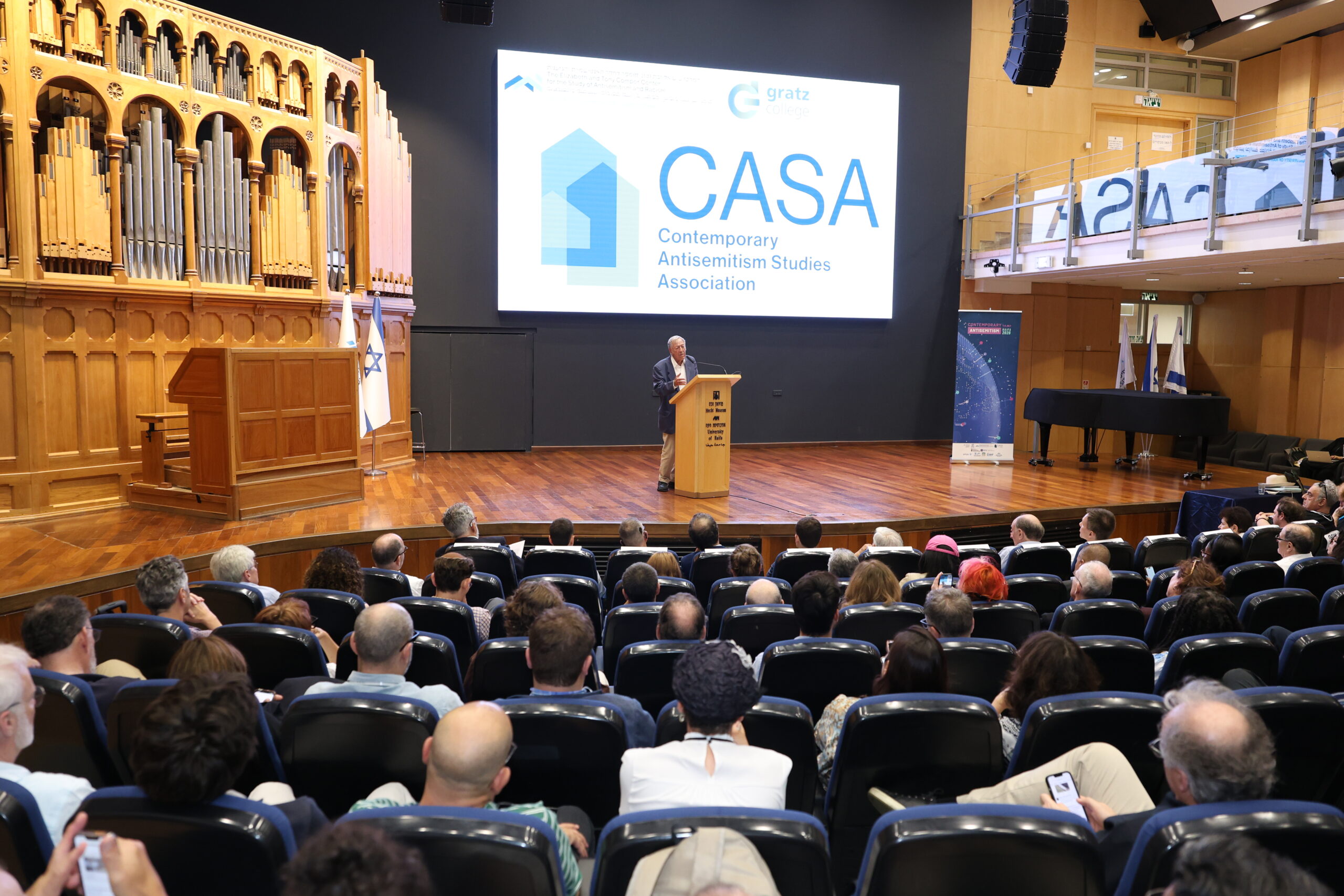
Through their annual conferences – London 2025, Haifa 2026 and Philadelphia 2027 – they are setting the agenda for rigorous and innovative work on contemporary antisemitism and providing a constructive alternative to the politicised and inappropriate academic frameworks now gaining ground.
OUR MISSION
Formalizing the network of antisemitism scholarship as an academic and professional field-defining body
Many scholars can see that contemporary antisemitism, including in its Israel-related form, is real and significant. They are thinking about it within their diverse disciplinary frameworks, bringing distinctive conceptual, quantitative and qualitative research methods to bear on it.
CASA: the Contemporary Antisemitism Studies Association, is a new community of scholarship that stakes out a field of study. It is a home in which this work can be done collaboratively and seriously, free from some of the ideological noise that makes this difficult in many of the disciplines as they currently exist.
CASA will build and maintain the scholarly infrastructure that this field requires: annual conferences, sub-networks and symposia; a CASA Journal; an academic book publishing series; a research funding hub; and ways of communicating the understandings and the knowledge gained by scholars and researchers, with stakeholders who can benefit; and who can make it impactful on wider society.
Why now?
CASA already exists. This community of contemporary antisemitism scholarship has met twice in London, it is meeting now in Haifa and it will meet next year in Philadelphia; at each meeting it progresses in number, confidence, quality and both disciplinary and geographical diversity. There is a Foundation Advisory Council, made up of some of the biggest names in the field; there are 200 founder member scholars; there are academic institutions that study antisemitism and there are partner practitioner organisations that are supporting CASA and who do their own valuable research.
CASA is now formalized as the scholarly association of the field, and it is building the infrastructure that it needs.
CASA is facilitating scholarly research on antisemitism and creating more opportunities for academics and researchers to collaborate, to discuss and to share methodological norms, advances and results.
CASA will see more world-class scholarly research being published and it will mentor more postgraduates and younger scholars into university careers. Antisemitic assumptions inside the academic disciplines will be challenged and undermined and there will be alternatives, greater intellectual diversity, offered to students.
The Boundaries
CASA embraces the norms and practices of academic life, not always as they are but as they should be. In particular it draws red lines around antisemitism and other kinds of unjust discriminatory power structures within its own community. Antisemitic, racist or sexist scholarship, for example, is not really scholarship.
CASA considers antizionist antisemitism, as well as older forms of right, left, religious and totalitarian antisemitism, to be real and significant. Antisemitism threatens Jews. It is also symptomatic of anti-democratic thinking in the academy and in public, cultural and political life.
CASA holds that scholarly community is founded on liberal democratic, Enlightenment values: evidence, argument and scholarly engagement.
Who?
The London Centre for the Study of Contemporary Antisemitism will function as the administrative heart of CASA, the sub-networks and the conferences and symposia.
Gratz College is building the CASA Journal, an open access platform for the publication of the highest quality scholarly research papers in the field. It will nurture the community of peer reviewers, writers, readers and users of research.
The Comper Center at Haifa University will develop the CASA Research Hub.
Together, we must raise research funding on a scale that is significant enough to challenge the antisemitism that currently appears normal and legitimate in some of our academic disciplines. This funding will be focused on Doctoral, post-Doctoral and research Fellowships across the institutions that participate in CASA and across the world.